How to Start a Daily Meditation Practice (When You’ve Failed Before)
Starting a meditation practice is easy. You download an app, choose a ten-minute session, sit down with good intentions, and decide that this time you are going to meditate every single day. For a few mornings, everything goes according to plan. Then you wake up late, skip a day, forget the next one, and suddenly the meditation app has been untouched for three weeks.
By Charlie Wells on August 18, 2026
Starting a meditation practice is easy. You download an app, choose a ten-minute session, sit down with good intentions, and decide that this time you are going to meditate every single day. For a few mornings, everything goes according to plan. Then you wake up late, skip a day, forget the next one, and suddenly the meditation app has been untouched for three weeks.
If this sounds familiar, you probably haven’t failed at meditation. You may simply have built a routine that was too ambitious, too inconvenient, or too dependent on motivation. Meditation is a habit like any other, and habits become easier to maintain when they fit naturally into your life. The goal is not to create a perfect streak. It is to build a practice that is easy enough to return to repeatedly.
Start much smaller than you think you should
When people decide to meditate, they often begin with an idealized version of the habit. They imagine waking up early, sitting peacefully for 20 or 30 minutes, and beginning every day with a perfectly calm mind. That might eventually become your routine, but it is an unnecessarily difficult place to start.
Try two or five minutes instead. A session that short may feel almost pointless, but that is precisely why it works as a starting point. When meditation requires very little time, it becomes harder to use a busy schedule as a reason to skip it. You are establishing the behavior first rather than trying to maximize the benefits immediately.
You can always continue once the timer ends. Some days, two minutes may naturally become ten. Other days, two minutes will be all you do. Both count. A habit that regularly happens for two minutes has more opportunity to grow than a 30-minute routine you repeatedly avoid.
Attach meditation to something you already do
“I’m going to meditate every day” sounds like a plan, but it leaves one important question unanswered: when?
Without a specific cue, meditation becomes another task floating around your day. You remember it while driving, forget it when you get home, and suddenly think about it again while falling asleep.
Instead, connect meditation to an existing routine. You might meditate after brushing your teeth, after making your morning coffee, before opening your laptop, or immediately after getting into bed. The existing behavior becomes a reminder for the new one.
Choose a time that fits your actual schedule rather than the schedule you think a person who meditates is supposed to have. If mornings are chaotic, you do not need to force yourself into a sunrise meditation routine. Lunch breaks, evenings, or even sitting in your parked car before walking into the house can work perfectly well.
Make the practice almost impossible to get wrong
Meditation becomes frustrating when you believe there is a particular experience you are supposed to achieve. You sit down expecting your mind to become quiet, but instead you think about work, dinner, an awkward conversation, your grocery list, and something embarrassing you said seven years ago.
Then you decide the session was terrible.
A wandering mind is not evidence that you cannot meditate. Noticing that your attention wandered is part of meditation. If you are focusing on your breathing, the basic process is simple: pay attention to the breath, notice when your mind moves elsewhere, and return your attention.
You may repeat that cycle fifty times. That is still meditation.
Removing the expectation that every session should feel peaceful makes it much easier to continue practicing on days when your brain refuses to cooperate.
Remove unnecessary friction
The more preparation a habit requires, the easier it becomes to postpone. Fortunately, meditation requires almost nothing.
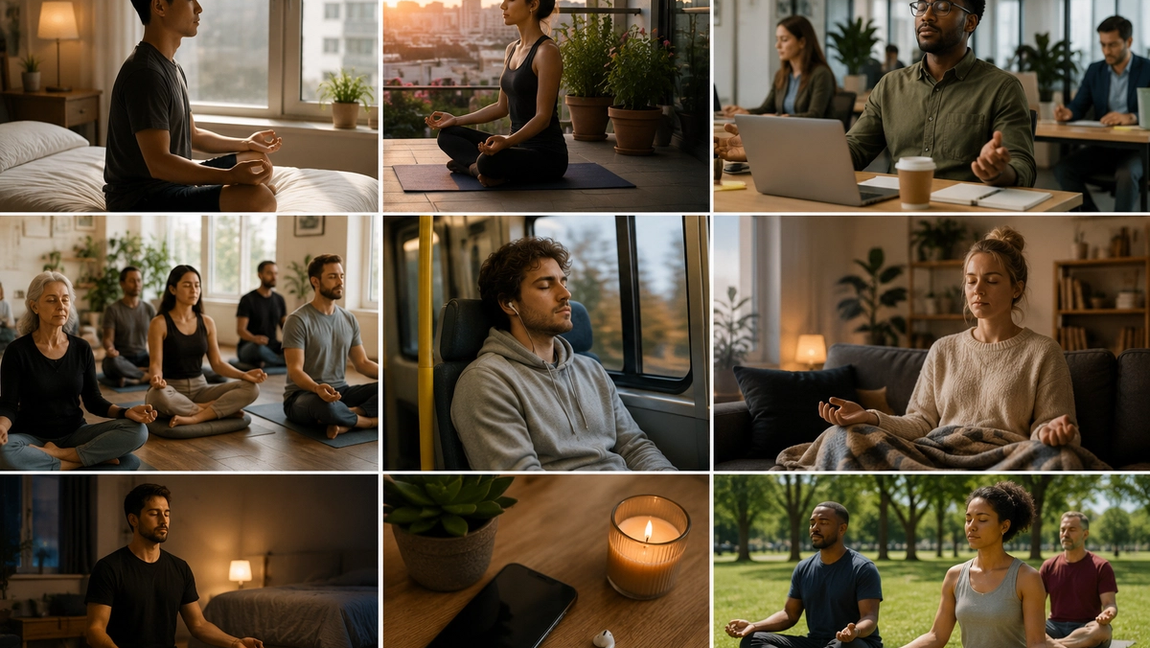
You do not need a meditation cushion, candles, special clothing, complete silence, or a dedicated room. You can meditate sitting on your couch, in a chair, on your bed, or even on public transport if you are comfortable doing so.
If you use guided meditation, keep the app somewhere easy to find rather than buried inside a folder. If you prefer a timer, create a shortcut. If you meditate in the morning, choose your location in advance so you do not have to make another decision when you wake up.
Small amounts of friction matter because motivation changes from day to day. On motivated days, you will overcome inconvenience. On ordinary days, convenience often wins.
Have a backup version for difficult days
Your normal meditation might be ten minutes every morning, but eventually you will have a morning when ten minutes feels impossible. This is where many habits disappear.
Create a minimum version before you need it. If you cannot do ten minutes, do two. If you cannot sit in your normal place, take three slow breaths while waiting for the train. If you miss the morning session, meditate briefly before bed.
The backup version is not about pretending that thirty seconds of breathing is identical to a longer meditation. Its purpose is to maintain your relationship with the practice during periods when life becomes unpredictable.
A flexible habit is often more durable than a rigid one.
Don’t let the streak become the goal
Tracking meditation can be motivating. Seeing seven, thirty, or one hundred consecutive days can provide a satisfying sense of progress. The problem begins when protecting the streak becomes more important than the practice itself.
Eventually, you will miss a day. When that happens, nothing meaningful has been erased. You still completed every previous session. You still practiced the skill. You simply did not meditate yesterday.
Avoid turning one missed session into a reason to abandon the routine entirely. Restart the next day without trying to compensate with an extra-long meditation.
Consistency is not the same as perfection. A person who meditates regularly for years while occasionally missing days has a far more established practice than someone who completes an intense 30-day challenge and never meditates again.
Focus on returning, not succeeding
A sustainable meditation practice is built on the same skill meditation itself teaches: returning.
During a session, your attention wanders and you bring it back. Across weeks and months, your routine may wander too. You travel, get sick, become busy, forget for several days, or simply lose interest for a while.
Then you return.
Instead of asking whether you have finally become someone who meditates every single day, ask whether meditation is becoming something you know how to come back to. Make the practice small, convenient, flexible, and forgiving enough to survive ordinary life.
You do not need another perfect beginning.
You need a practice that can survive an imperfect middle.