The Books Worth Reading Twice
There are too many books in the world and not enough time to read them all, which makes rereading seem almost inefficient.
By Ricardo Turner on August 18, 2026
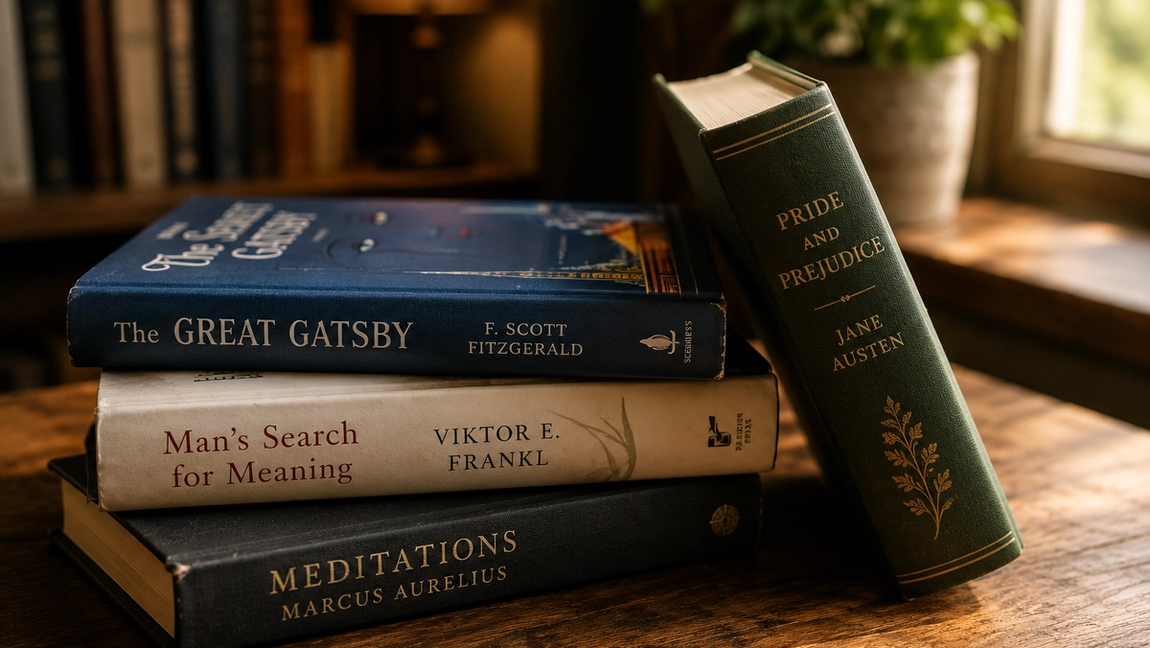
There are too many books in the world and not enough time to read them all, which makes rereading seem almost inefficient. Why return to a story you already know when hundreds of unread books are waiting? Why revisit an argument when you remember the conclusion? For people who measure their reading by how many books they finish, starting the same one again can feel like moving backward.
But the best books rarely give you everything they have the first time. Sometimes you were too young to understand what a novel was really saying. Sometimes you remember the main argument of a nonfiction book but have forgotten the ideas that made it useful. And sometimes the book has not changed at all—you have. Reading it again several years later can feel like encountering a completely different work.
The books worth reading twice are not necessarily the longest, smartest, or most famous. They are the ones that continue to offer something when you return.
Read great fiction again after you’ve changed
The first time you read a novel, much of your attention goes toward finding out what happens. The second time, you already know. That frees you to notice how the story was constructed, what the characters misunderstood, and which details were quietly preparing you for what came later.
This is especially true of books that deal with experiences we understand differently as we age. F. Scott Fitzgerald’s The Great Gatsby can look like a glamorous story about wealth and obsession when you first encounter it, then become a much darker examination of status, reinvention, and dissatisfaction when you return later. Jane Austen’s Pride and Prejudice becomes richer when you pay attention not only to the romance but also to money, family, reputation, and the limited choices available to women in its world.
George Orwell’s 1984 is another obvious candidate for rereading. The plot is memorable enough that many people feel they already “know” the book, but returning to it allows you to pay more attention to its ideas about language, truth, conformity, surveillance, and the manipulation of collective memory.
Great fiction changes because the reader changes.
Return to books about meaning and human nature
Some books are valuable precisely because they resist being reduced to a few memorable lessons.
Viktor Frankl’s Man’s Search for Meaning, for example, is frequently summarized as a book about finding purpose in difficult circumstances. That description is accurate but incomplete. Rereading it can reveal different questions about suffering, responsibility, freedom, and the limits of what individuals can control.
Marcus Aurelius’s Meditations works similarly. It is not really a book designed to be consumed once from beginning to end and then placed permanently on a shelf. It is a collection of personal reflections, and different passages become relevant depending on what is happening in your life. Advice about ambition may stand out during one reading, while ideas about anger, mortality, or other people’s opinions may feel more important years later.
These books reward rereading because their value depends partly on what the reader brings to them. The sentence that seemed ordinary at 22 can feel remarkably precise at 35.
Reread practical books you actually want to use
Nonfiction has a particular problem: we often confuse reading an idea with implementing it.
You finish a productivity book and feel as though you have transformed your working habits. Six months later, you remember two concepts and are working almost exactly as you did before.
That makes practical books excellent candidates for rereading. James Clear’s Atomic Habits, for example, contains ideas that are relatively easy to understand but much harder to consistently apply. A second reading can be less about discovering the concepts and more about examining whether you actually changed your environment, made useful behaviors easier, or created reliable cues for the habits you wanted to build.
Daniel Kahneman’s Thinking, Fast and Slow is another book that can benefit from revisiting. Its discussion of judgment, intuition, and cognitive biases contains more than most readers are likely to retain from one pass. Returning to particular sections can help refresh ideas that are easy to recognize intellectually and surprisingly difficult to notice in your own decisions.
The goal is not necessarily to reread every page. Sometimes returning to the most useful chapters is enough.
Revisit books that influenced how you think
One of the most interesting reasons to reread a book is to discover whether you still agree with it.
Certain books arrive at exactly the right moment and become part of how you understand work, relationships, money, politics, creativity, or yourself. Years later, you may still repeat ideas you originally encountered there without remembering where they came from.
Rereading gives you an opportunity to examine those influences.
Do the arguments still hold up? Did you oversimplify them in your memory? Are there claims you accepted too easily the first time? Does the author seem more convincing now—or much less?
This is especially useful with books that strongly shaped your worldview. Reading critically does not mean searching for reasons to dislike them. It means allowing yourself to disagree with the person you were when you first read them.
Sometimes the most valuable second reading is the one that changes your mind.
Return to books you simply loved
Not every reread needs an intellectual justification.
People rewatch favorite movies and television shows without worrying that they should be watching something new. We replay songs hundreds of times. Yet books sometimes get treated as tasks to complete rather than experiences worth repeating.
There is nothing wrong with returning to a novel because you love being in its world.
Maybe that is Harry Potter, The Lord of the Rings, Little Women, or a book nobody else considers particularly important. Familiar stories can provide comfort precisely because you know what happens. You can enjoy the language, characters, atmosphere, and small details without racing toward the ending.
Reading does not always have to be self-improvement disguised as leisure.
Sometimes a book is worth reading twice simply because the first time made you happy.
Don’t reread everything from beginning to end
Rereading does not need to mean restarting on page one.
With nonfiction especially, you can revisit highlighted sections, favorite chapters, or ideas you want to apply. If you keep notes while reading, reviewing those notes several months later can help you decide whether the entire book deserves another pass.
You can also change formats. A book you originally read on paper might work well as an audiobook the second time, particularly if you already know the basic structure. Hearing the words rather than seeing them can make different details stand out.
The point is not to prove that you have read the book twice. It is to return to whatever was valuable enough to deserve your attention again.
The best books grow with you
A first reading answers one question: What does this book say?
A second reading can answer something more interesting: What does this book say to me now?
Between those readings, you may have changed jobs, fallen in love, lost someone, become a parent, failed at something important, traveled, succeeded, or simply accumulated several more years of ordinary life. Experiences give you context you did not have before.
The words on the page remain the same, but the person reading them does not.
With an average book, that difference may not matter. With a great one, it can change almost everything.
There will always be another new book waiting. But sometimes the most interesting thing on your bookshelf is one you already think you know.