The Difference Between Mindfulness and Meditation
Mindfulness and meditation are often talked about as though they are the same thing. Meditation apps promise to make you more mindful, mindfulness classes include meditation, and both are regularly recommended for managing stress and improving wellbeing. It is easy to see why the terms get mixed together.
By Elian Brady on August 18, 2026
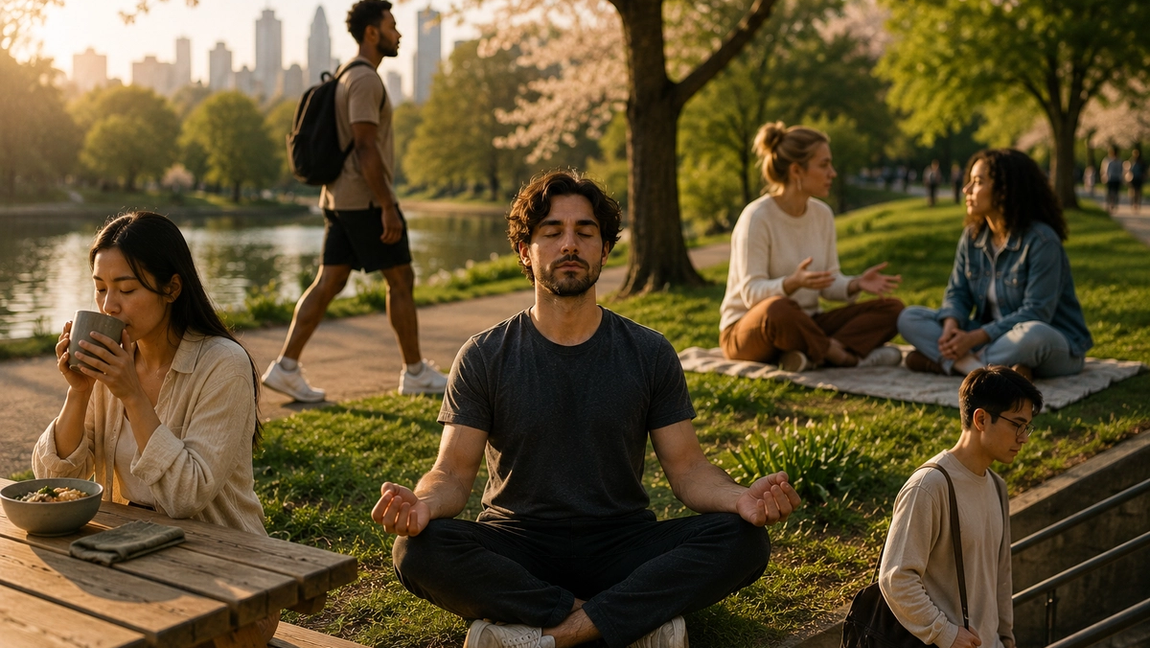
Mindfulness and meditation are often talked about as though they are the same thing. Meditation apps promise to make you more mindful, mindfulness classes include meditation, and both are regularly recommended for managing stress and improving wellbeing. It is easy to see why the terms get mixed together.
They are closely connected, but they are not interchangeable. The simplest distinction is this: mindfulness is a way of paying attention, while meditation is a practice you can use to train attention. You can meditate to develop mindfulness, but you can also practice mindfulness while eating lunch, walking to work, or having a conversation.
Understanding that difference makes both concepts much less mysterious—and much easier to use in everyday life.
Mindfulness is a way of paying attention
At its core, mindfulness means deliberately paying attention to what is happening in the present moment. That could include what you can see and hear, sensations in your body, your breathing, emotions, or the thoughts moving through your mind.
The important part is noticing these experiences without immediately trying to change, judge, or escape them. If you are feeling nervous before a presentation, for example, mindfulness might involve noticing that your shoulders are tense, your breathing feels faster, and worried thoughts are appearing. Instead of immediately deciding that the nervousness is terrible or trying to force it away, you simply recognize what is happening.
This sounds simple, but it is surprisingly different from how many of us spend our days. We often operate automatically, thinking about what happened yesterday while doing something today and simultaneously worrying about what might happen tomorrow. Mindfulness is essentially the practice of returning your attention to what is actually happening now.
Meditation is a deliberate practice
Meditation is more structured. You intentionally set aside a period of time to practice working with your attention and awareness.
There are many forms of meditation. You might focus on your breathing, notice sensations throughout your body, repeat a phrase, observe sounds, or simply notice thoughts as they appear and disappear. Some meditation practices specifically cultivate mindfulness, while others have different goals or traditions behind them.
In a basic mindfulness meditation, you might sit comfortably and focus on the sensation of breathing. Eventually, your attention wanders to tomorrow’s schedule, something someone said earlier, or what you are having for dinner. Once you notice, you gently return your attention to the breath.
That repeated cycle—focus, wander, notice, return—is part of the training.
You can think of meditation as dedicated practice time. Mindfulness is one of the abilities you may be practicing.
You can be mindful without meditating
This is where the distinction becomes especially useful. You do not have to sit with your eyes closed for 20 minutes to practice mindfulness.
Imagine you are drinking your morning coffee. Normally, you might drink it while checking email, reading the news, and mentally planning the day. A mindful version could simply involve spending a minute actually noticing the experience: the temperature of the cup, the smell, the taste, and how your body feels.
You can do the same thing while walking. Instead of automatically reaching for your phone, notice your surroundings, your pace, the feeling of your feet touching the ground, and the sounds around you.
Even conversations can become opportunities for mindfulness. Rather than planning your response while another person is speaking, you can deliberately bring your attention back to what they are actually saying.
None of these activities requires formal meditation. They simply involve being more intentional about where your attention is.
Meditation can make mindfulness easier
If mindfulness can happen anywhere, you might reasonably wonder why meditation is necessary at all.
It is not strictly necessary. But dedicated practice can make mindfulness easier to recognize and use in everyday situations.
During meditation, there are fewer competing tasks. You intentionally create a period in which your main job is to notice your attention. That makes it easier to observe how quickly your mind wanders and how automatically you become absorbed in thoughts.
Over time, you may start noticing the same patterns outside meditation. You catch yourself rereading an upsetting message for the fifth time. You realize you have been scrolling without consciously deciding to continue. You notice irritation building during a conversation before responding sharply.
Meditation does not prevent distraction or difficult emotions. It can simply give you more practice noticing them earlier.
Neither requires you to stop thinking
Both mindfulness and meditation suffer from the same common misconception: that success means having a completely quiet mind.
That is not the goal.
Thoughts are going to appear. During meditation, you might remember an unfinished task, replay a conversation, plan dinner, or suddenly wonder where you left your keys. During a mindful walk, you may realize you have spent several minutes thinking about work instead of noticing your surroundings.
The practice is noticing what happened and returning your attention.
Trying to force yourself not to think can actually make the process more frustrating. A more useful approach is to recognize thoughts without automatically following every one of them. You can notice a thought and allow it to pass without needing to solve it immediately.
Which one should you practice?
You do not really need to choose between mindfulness and meditation because they can work together.
If you like structure, try a short meditation practice. Five or ten minutes of guided meditation can provide a straightforward introduction without requiring a major commitment. If sitting still feels frustrating, experiment with walking meditation or another form that involves movement.
If formal meditation does not appeal to you, start with everyday mindfulness. Pick one routine activity and try doing it with your full attention. Eat one meal without looking at your phone. Take a short walk without headphones. Listen fully during a conversation. Notice your breathing while waiting for the elevator.
The point is not to turn every ordinary activity into an intense exercise in awareness. It is simply to create occasional moments when you are actually present for what you are doing.
The difference is simpler than it sounds
Mindfulness and meditation belong to the same family, but they play different roles. Meditation is a deliberate practice you set aside time to do. Mindfulness is a quality of attention you can bring into meditation or ordinary life.
You can meditate without becoming perfectly mindful, and you can practice mindfulness without ever sitting down for a formal meditation session.
Both ultimately involve learning to notice where your attention is and bringing it back when it wanders.
In a world designed to pull your attention in dozens of directions at once, that seemingly simple skill can be surprisingly valuable.